
 EN
EN
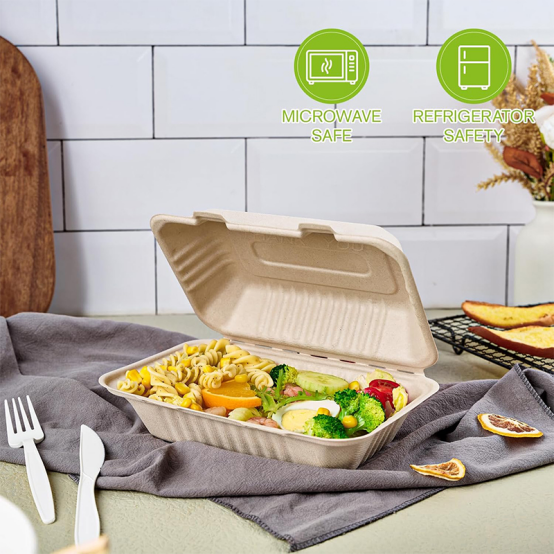
FDA Regulatory Framework for Disposable Bagasse Tableware
Key CFR Sections: 21 CFR 176.170 and 176.180 Applied to Bagasse
Disposable bagasse tableware falls under FDA regulation through two main parts of Title 21 CFR. Section 176.170 deals with indirect food additives found in coatings and paperboard that touch both watery and greasy foods. Then there's section 176.180 for materials meant to come into contact with dry foods. Bagasse itself comes from sugarcane processing and has some pretty interesting properties. When it meets heat or moisture, it absorbs and expands in ways that make compliance tricky. That's why manufacturers need to test against both standards simultaneously. The testing involves standard food simulants like 10% ethanol for fatty foods and acetic acid for acidic ones. These tests happen at specific temperatures over certain time periods to mimic real world usage. Getting third party lab results from ISO/IEC 17025 accredited facilities is non-negotiable here. Labs check if substances like heavy metals and volatile organics stay below what the FDA considers safe levels. This double check system makes sure products work safely in actual restaurant settings where conditions vary constantly throughout the day.
Critical Safety Benchmarks: Migration Limits, PFAS-Free Verification, and Heavy Metal Compliance
Authentic FDA compliance rests on three non-negotiable safety benchmarks:
- Migration limits: Extractables must not exceed 0.5 ppm for lead and cadmium, verified through accelerated migration testing (e.g., 2 hours at 120°F with appropriate simulants);
- PFAS-free verification: Confirmed via GC-MS or LC-MS/MS analysis detecting perfluorinated compounds at ≤20 parts per trillion—aligning with California AB 1200 and the FDA’s 2023 advisory on intentional PFAS use;
- Heavy metal speciation: Chromium VI levels must be documented below 10 ppm using validated ICP-MS methodology.
These criteria collectively reduce contamination risk by up to 98% compared to non-compliant alternatives, according to the 2023 Food Packaging Safety Initiative. Crucially, compliance isn’t inferred from material origin or marketing claims—it must be demonstrated per batch through test reports explicitly citing 21 CFR 176.170 and 176.180.
How to Verify Authentic FDA Compliance in Bagasse Tableware Suppliers
Interpreting Third-Party Test Reports from Accredited Labs
True FDA compliance is evidenced only by third-party test reports from laboratories accredited to ISO/IEC 17025, with scope explicitly covering FDA food contact regulations. Reports must:
- Cite compliance with both 21 CFR 176.170 and 176.180—not generic “food-safe” language;
- Specify migration results for lead (<0.5 ppm), cadmium (<0.1 ppm), and chromium VI (<10 ppm);
- Confirm absence of PFAS at detection limits ≤20 ppt and chloropropanols at non-detectable levels;
- Reflect testing under realistic conditions—such as 120°F for 2 hours using acidic (3% acetic acid) and oily (vegetable oil) simulants.
Always cross-check the lab’s accreditation certificate and verify its current status via the ANSI-ASQ National Accreditation Board (ANAB) database.
Supplier Due Diligence Checklist: Certificates, Batch Testing, and Traceability Documentation
Robust supplier vetting goes beyond reviewing a single report. Use this evidence-based checklist:
- Certificates: Require FDA compliance letters signed and dated by the laboratory director—not internal declarations or marketing summaries;
- Batch testing: Insist on migration test reports tied to specific production lots, not annual or “representative” audits;
- Traceability: Demand lot-level documentation tracing raw bagasse sourcing (e.g., mill name, harvest date, pretreatment method) through pulping, molding, and finishing;
- PFAS verification: Confirm testing methods detect fluorochemicals at ≤20 ppt sensitivity, with full chromatograms available upon request.
A 2023 Ponemon Institute study found that 68% of suppliers labeled as “FDA-compliant” could not produce lot-specific migration data. Mitigate this risk by combining document review with unannounced facility audits focused on quality control workflows and sample retention practices.
Beyond FDA: Integrated Food Safety Assurance for Bagasse Tableware
FDA compliance establishes the legal minimum—but leading manufacturers layer additional certifications to close critical gaps in chemical safety, environmental impact, and supply chain integrity. This integrated framework includes:
- ASTM D6400 (U.S.) and EN 13432 (EU), verifying industrial compostability within 180 days without ecotoxic residues;
- DIN CERTCO certification, confirming alignment with EU No 10/2011 food contact requirements—including stricter migration limits for certain oligomers and additives;
- ISO 17088 biodegradability validation, ensuring breakdown occurs without generating harmful metabolites;
- Third-party PFAS screening down to 100 ppm in raw pulp and finished goods, supplementing FDA-mandated final-product testing.
When companies track material sources all the way back to where fibers came from, what processing steps were used, and which additives were included, they see about 92 percent fewer contamination problems than those relying only on FDA standards according to last year's Packaging Sustainability Report. What does this mean for actual operations? Bagasse tableware isn't just ticking boxes anymore it becomes something that can handle audits without issues, satisfies what retailers demand regarding green practices, and builds customer confidence especially important when serving food in restaurants or cafes where mistakes could be costly.