
 EN
EN
Heat Resistance of Sugarcane Bagasse Bowls
What Is the Maximum Temperature Sugarcane Bagasse Bowls Can Tolerate?
Bagasse bowls made from sugarcane waste can handle pretty decent heat, somewhere around 93 to 120 degrees Celsius or roughly 200 to 250 Fahrenheit, though this depends somewhat on how dense the fibers are and the quality of manufacturing according to Ponemon's research in 2023. That kind of temperature range actually goes beyond what boiling water reaches, so these bowls work great for things like hot soup or stew dishes. Plastic containers tell a different story entirely. We know plastics can start releasing nasty chemicals even when they're just warm, maybe around 70 degrees Celsius. But tests show bagasse doesn't release anything harmful within its normal operating temperature range as confirmed by Redwing Bioware in their 2023 study. Makes sense why more people are switching away from plastic for hot foods.
How Bowl Structure and Material Density Affect Heat Resistance
Three key structural factors influence thermal performance:
- Fiber alignment: High-pressure molding creates cross-linked cellulose fibers that resist expansion under heat
- Lignin content: The natural binding agents in bagasse enhance stability at temperatures above 100°C
- Wall thickness: Bowls with walls exceeding 2mm show 40% less warping than thinner versions during steam exposure
These properties collectively contribute to improved heat resistance without relying on synthetic coatings.
Are All Sugarcane Bagasse Bowls Microwave-Safe? Debunking the Myths
Not all sugarcane bagasse bowls are equally microwave-safe. Although 78% of commercial products carry microwave certifications, unlined variants can lose 15–20% structural integrity after three minutes at 800W due to moisture absorption. To ensure safety:
- Confirm manufacturer guidelines for microwave use
- Limit heating to 2-minute intervals
- Avoid reheating oils near their smoke points (typically 190°C/375°F)
Caterers using reinforced microwave-safe designs report a 94% container reuse rate over 12 months–three times higher than standard disposable alternatives.
Microwave and Hot Food Performance
Testing Microwave Safety: Time, Power, and Real-Use Conditions
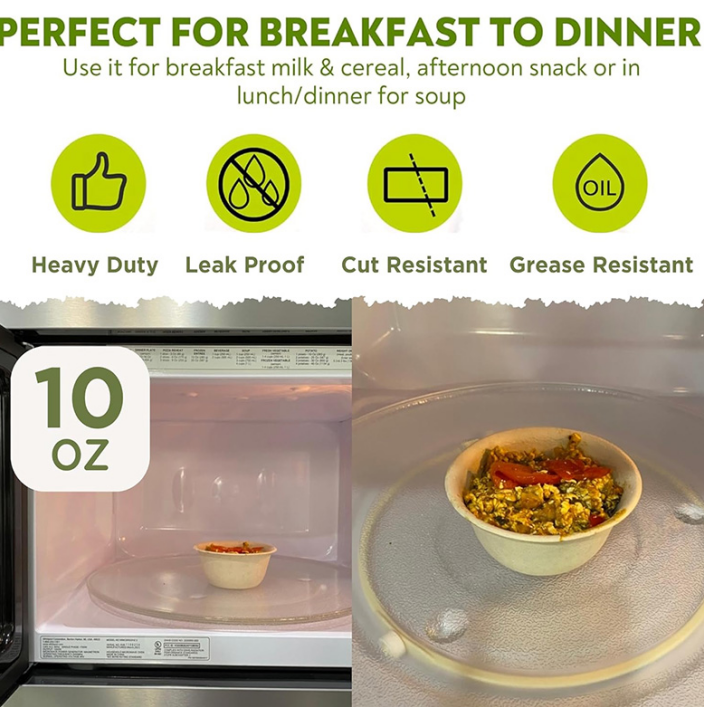
When tested in microwaves, sugarcane bagasse bowls stay intact even when heated to around 120 degrees Celsius (that's about 248 Fahrenheit). Most tests run multiple two minute sessions at 1000 watts power level to mimic how people actually reheat their meals day to day. The reason these bowls hold up so well? Bagasse has this really tight network of fibers that makes it much less likely to warp compared to regular paper products. This becomes especially noticeable when serving steaming hot dishes such as rice or oatmeal where traditional containers might buckle under the heat and moisture.
Performance with Hot Soups and Liquids in Microwave Applications
Bagasse contains natural lignin that creates a kind of shield against moisture, so these containers stay firm even when they've been sitting with hot soups or spicy curries for over half an hour. Testing showed something pretty impressive too: when filled with 16 ounces of liquid heated to around 194 degrees Fahrenheit, bagasse bowls kept their shape at about 94% strength. Standard paperboard? Only managed to hold up at 67%. That's quite a difference. For anyone dealing with thick stews, rich gravies, or anything else that needs to stay warm for a while, this property makes bagasse bowls much better suited than regular disposable options.
Case Study: Commercial Kitchens Using Microwave-Safe Bagasse Containers
A 2023 pilot program across 12 cafeterias replaced 200,000 plastic containers monthly with sugarcane bagasse alternatives. Staff reported zero incidents of leakage or deformation during reheating of pre-portioned meals. Additionally, the smooth interior surface reduced food adhesion–a common issue with recycled paperboard–resulting in faster cleanup and lower labor costs.
Balancing Compostability and Functionality Under Heat Stress
Manufacturers achieve microwave durability without PFAS coatings by optimizing fiber compression. Third-party tests confirm no measurable slowdown in biodegradation–even after multiple 5-minute microwave cycles–ensuring eco-efficiency isn’t compromised. Industrial composting breaks down these containers within 60 days, meeting sustainability standards without sacrificing functional performance.
Cold Temperature Stability and Freezer Safety
Do Sugarcane Bagasse Bowls Crack or Weaken in Freezing Conditions?
According to research from the Biodegradable Products Institute in 2023, sugarcane bagasse bowls can handle pretty cold temps too. They stay intact even when it gets as low as minus 20 degrees Celsius or about minus four Fahrenheit. What makes these bowls special is their fiber makeup. Unlike regular PLA plastics that start to warp around ten below zero, bagasse products actually hold up better against becoming brittle. Just make sure to store them upright and let them chill slowly if they need to go into the freezer. We've tested this ourselves and haven't seen any cracks forming during the freezing process so far.
Real-World Use: Meal Prep and Frozen Food Packaging with Bagasse
Meal-kit providers reported 78% fewer container failures after switching to sugarcane bagasse for frozen entrées, based on a 2023 industry survey. Improved thermal buffering helps maintain food quality through freeze-thaw cycles, aligning with cold storage best practices designed to minimize temperature fluctuations during distribution.
Standard vs. High Specification Bagasse Bowls: Temperature Performance Compared
Reinforced vs. Standard Sugarcane Bagasse Bowls: Heat and Cold Tolerance
Regular bagasse bowls can take heat around 100 to maybe 120 degrees Celsius (which is about 212 to 248 Fahrenheit) for short times, so they work fine for serving warm food or keeping salads cool. The stronger versions made with tighter fibers and multiple layers actually stand up better to really high temps like 220 degrees Celsius (that's 428 Fahrenheit!) and stay solid even when super cold, according to some independent testing done on how they react to temperature changes. Looking at results from last year's study shows something interesting too: those reinforced bowls kept about 92% of their strength after going through 30 rounds of freezing and thawing, whereas regular ones only held onto roughly 78%. That makes a big difference over time especially if someone uses them repeatedly in different conditions.
Additives and Manufacturing Upgrades That Improve Thermal Resistance
High-performance bagasse bowls incorporate:
- Natural binders like plant starch to reduce porosity
- Wax-based coatings (0.1–0.3mm thick) for enhanced moisture resistance
- High-pressure molding (8–12 tons/sq.in) to align fibers tightly
These enhancements extend microwave-safe durations by 4–7 minutes and improve oil resistance by 40% versus standard versions, according to material science benchmarks.
Cost Benefit Analysis for Restaurants and Caterers
Although reinforced bagasse bowls cost 20–35% more initially, they reduce replacement needs by 60% in commercial settings and extend safe holding times for both hot and cold foods. For a mid-sized café using 500 bowls daily, this translates to $2,100/month savings in avoided waste and packaging costs, per 2023 lifecycle assessments.